Introduction: India Is Earning More—but Saving Less
Over the last decade, India has witnessed a remarkable economic transformation. Rising incomes, expanding middle class, digital payments, and easy access to financial products have reshaped how Indians earn, spend, and invest money.
But beneath this growth story lies a subtle and concerning shift.
India, traditionally known as a high-saving economy, is slowly moving toward a credit-driven consumption model.
According to recent macroeconomic data:
- Household financial savings have fallen sharply to around 5–6% of GDP, one of the lowest levels in over a decade
- At the same time, household debt has risen to over 40% of GDP, nearly doubling in the last 10–12 years
- The growth in liabilities is significantly outpacing the growth in assets
This is not just a statistical anomaly. It reflects a deeper behavioral transition.
Earlier generations followed a simple rule:
“Save first, spend later.”
Today’s reality is increasingly:
“Spend now, pay later.”
This shift is at the core of most financial mistakes Indians make today.
What makes this more dangerous is that these mistakes are not limited to low-income households. Even high earners—people making ₹20–50 lakh annually—often struggle with wealth creation.
Why?
Because income does not create wealth—behavior does.
In this article, we will go beyond surface-level advice and deeply examine the 7 most critical financial mistakes Indians make, backed by trends, psychology, and real-life financial patterns.
Mistake #1: Absence of a Financial Roadmap
One of the most fundamental issues in personal finance in India is the absence of structured financial planning.
For a large majority of individuals, financial decisions are reactive rather than proactive. Salaries are credited, expenses are incurred, and whatever remains is treated as savings. Investments, if any, are often scattered across products without a clear objective.
This approach creates the illusion of control, but in reality, it leads to fragmentation.
Consider a typical urban professional earning ₹1.2 lakh per month. They might have:
- A few mutual fund SIPs
- A traditional insurance policy
- Some fixed deposits
- Occasional stock investments
At first glance, this appears diversified. But when analyzed closely, there is often:
- No clarity on retirement corpus
- No mapping of investments to goals
- No understanding of required rate of return
This lack of alignment is the real problem.
A financial roadmap is not about complexity—it is about direction. Without it, even disciplined saving fails to translate into meaningful wealth.
In developed markets, goal-based investing is the norm. In India, however, planning is still evolving, and many individuals operate without calculating:
- How much they need for retirement
- How inflation will impact future expenses
- Whether their current investments are sufficient
The result is a dangerous gap between perception and reality.
Mistake #2: Over-Reliance on “Safe” Assets That Don’t Build Wealth
India’s financial culture has historically favored safety over growth.
Assets like fixed deposits, gold, and real estate have dominated household portfolios for decades. While these instruments provide stability, they often fail to generate real wealth when adjusted for inflation.
For instance, bank fixed deposits in recent years have offered returns in the range of 5–7%. With inflation hovering around similar levels, the real return is close to zero.
This means that while the nominal value of money increases, its purchasing power does not.
Gold, another popular asset, serves as a hedge but does not generate income. Real estate, though seen as a wealth creator, is often illiquid and subject to long cycles of stagnation.
Data shows that a significant portion of Indian household wealth is still tied up in physical assets, even as financial markets have matured and become more accessible.
In contrast, equities—despite their volatility—have historically delivered superior long-term returns. Yet, participation in equity markets remains relatively low compared to developed economies.
This mismatch between asset allocation and financial goals is a major reason why many Indians struggle to build long-term wealth despite consistent savings.
Mistake #3: Treating Credit as Income
Perhaps the most defining shift in India’s financial behavior is the normalization of credit.
The rise of:
- Credit cards
- Buy Now Pay Later (BNPL) platforms
- Instant personal loans
has fundamentally changed consumption patterns.
What was once a deliberate decision—borrowing money—is now frictionless and often invisible.
The psychological impact of this shift is profound.
When individuals use credit, especially digital credit, the pain of spending is delayed. This leads to higher consumption and reduced financial discipline.
Data indicates that a growing share of household borrowing is directed toward consumption rather than asset creation. This includes:
- Electronics
- Travel
- Lifestyle purchases
While each individual expense may seem manageable, the cumulative effect is significant.
A person earning ₹80,000 per month may end up committing:
- ₹20,000 toward EMIs
- ₹10,000 toward credit card payments
This effectively reduces disposable income and limits the ability to invest.
Over time, this creates a situation where future income is already “spent,” leaving little room for wealth creation.
Mistake #4: Lack of Preparedness for Financial Shocks
Financial shocks are inevitable. Job losses, medical emergencies, and unexpected expenses are part of life.
However, most Indian households remain underprepared.
The absence of an adequate emergency fund forces individuals to rely on high-cost borrowing during crises. This not only increases financial stress but also disrupts long-term financial plans.
The COVID-19 pandemic exposed this vulnerability at a national level. Many households that appeared financially stable struggled to manage even a few months without income.
The core issue is not just lack of savings—it is the lack of liquid savings.
Money locked in:
- Real estate
- Long-term investments
- Insurance products
cannot be easily accessed during emergencies.
An emergency fund acts as a financial buffer, preventing temporary setbacks from turning into long-term damage.
Mistake #5: Delaying Wealth Creation Due to Behavioral Biases
One of the most underestimated factors in personal finance is time.
The earlier one starts investing, the more powerful compounding becomes. Yet, many individuals delay investing due to:
- Fear of market volatility
- Lack of knowledge
- Preference for immediate consumption
This delay has a disproportionate impact on long-term outcomes.
For example, starting investments at age 25 versus 35 can result in a difference of several crores over a working lifetime, even with the same monthly contribution.
The reason is simple: compounding needs time to work.
However, human psychology often prioritizes the present over the future. This is known as present bias, and it leads to decisions that favor immediate gratification at the cost of long-term benefits.
In India, this is further amplified by social and cultural factors, where lifestyle upgrades often take precedence over financial security.
Mistake #6: Low Financial Literacy and Mis-Selling of Products
Financial literacy remains one of the weakest links in India’s economic development.
Despite increased access to financial products, understanding of these products remains limited.
This gap creates an environment where mis-selling thrives.
Common examples include:
- Insurance policies sold as investment products
- High-cost financial instruments with low transparency
- Overly complex products that are not aligned with customer needs
Many individuals rely on agents or informal advice networks, leading to decisions that are not always in their best interest.
The problem is compounded by the fact that financial education is not systematically integrated into the education system.
As a result, individuals often learn through experience—and mistakes.
Mistake #7: Lack of Portfolio Diversification in a Changing Economy
India’s economy is evolving rapidly, but household portfolios have not kept pace.
A typical portfolio is still heavily skewed toward:
- Real estate
- Gold
- Fixed-income instruments
While these assets provide stability, they do not fully participate in economic growth.
Diversification is not just about spreading risk—it is about aligning investments with different economic cycles.
Equities, for instance, benefit from economic expansion. Debt instruments provide stability. Gold acts as a hedge.
A well-diversified portfolio balances these elements.
However, many individuals either:
- Over-diversify without strategy
- Under-diversify by concentrating in familiar assets
Both approaches can limit returns and increase risk.
Conclusion: The Real Problem Is Behavioral, Not Financial
When we analyze these mistakes collectively, a clear pattern emerges.
The issue is not lack of income or opportunity.
India today offers:
- Access to global markets
- Diverse investment options
- Digital financial tools
Yet, financial outcomes remain suboptimal.
The reason lies in behavior.
- Short-term thinking overrides long-term planning
- Convenience replaces discipline
- Perception of safety replaces actual returns
The shift from a saving economy to a borrowing economy is not inherently negative—but without financial awareness, it can lead to instability.
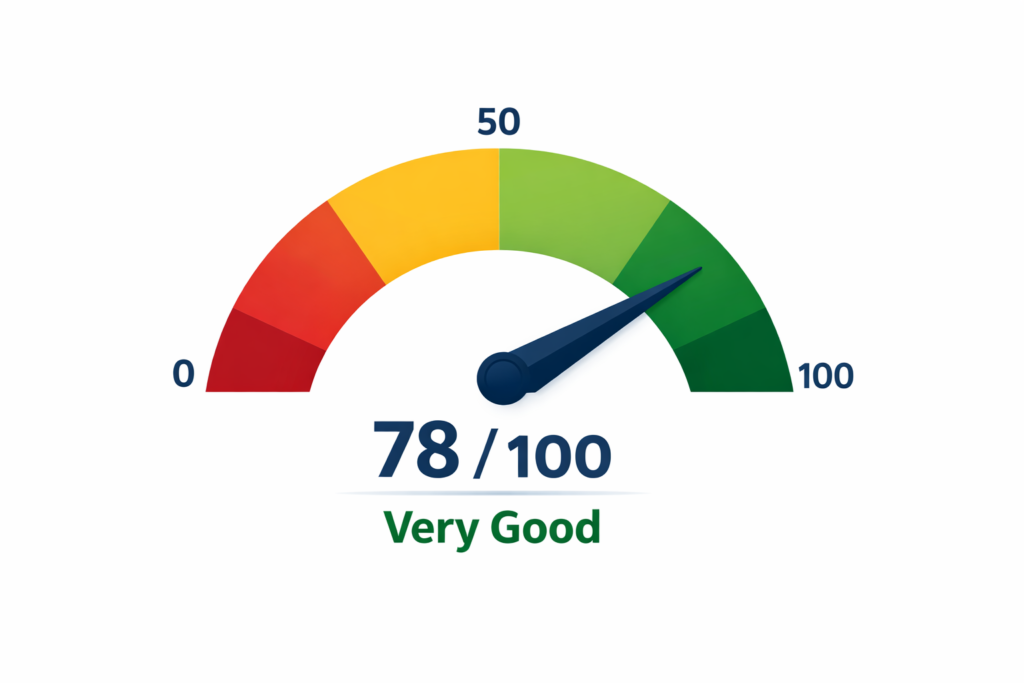
The good news is that these mistakes are reversible. For that you first need to assess your financial health score. This score will help you unterstand what is your financial condition and how to improve it.
By:
- Planning with clarity
- Investing with purpose
- Managing debt responsibly
individuals can significantly improve their financial outcomes.
In a country where millions are entering the middle class every year, the difference between financial success and struggle will not be determined by income alone—but by the ability to manage it effectively.
Select Your Favorite Section