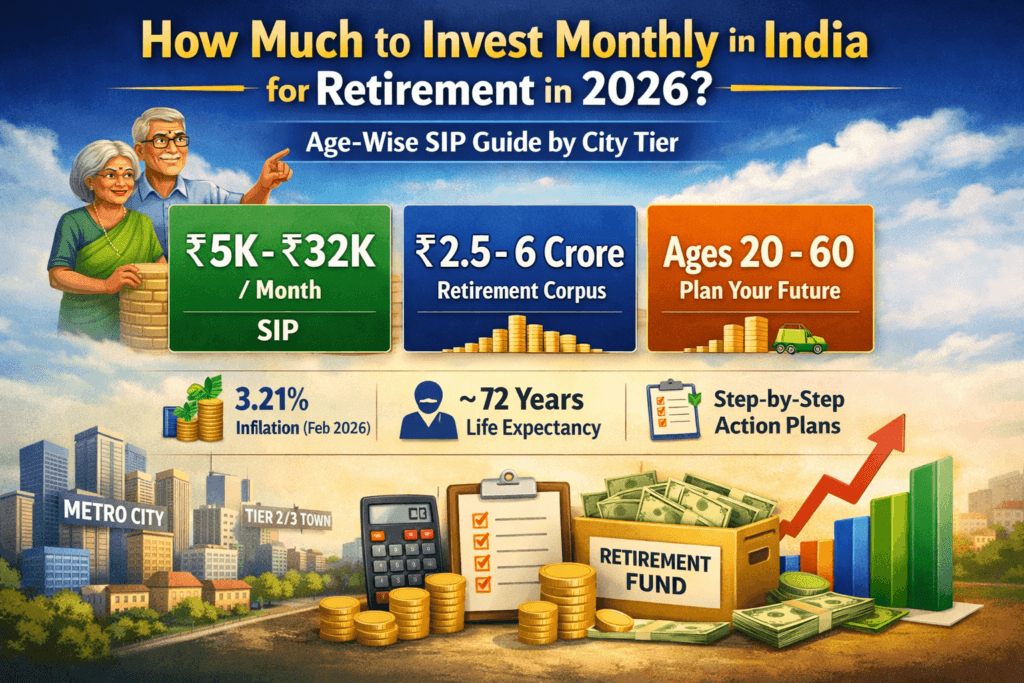

Forty years old. For most Indians, this age carries a particular weight — the midpoint of a working life, the decade when careers peak, when EMIs are at their largest, when children need the most attention, and when parents begin needing care. Forty is when most Indians feel most financially stretched, not most financially free.
And yet, every year, a small but growing number of Indian professionals are walking away from their careers at exactly this age. Not because they failed. Not because they were forced out. But because they planned meticulously for a decade, saved aggressively, invested intelligently, and reached a number that, by the mathematics of compounding and safe withdrawal rates, will sustain them for the next 50 years.
Is FIRE at 40 realistic for Indians? The honest answer is: for some people, absolutely yes. For most people, it is extremely difficult but not impossible. And for everyone who pursues it, even getting halfway there — reaching Coast FIRE or Barista FIRE at 40 — produces a dramatically better financial life than the default path of working until 60.
This guide examines the FIRE at 40 question with complete honesty — the mathematics, the lifestyle requirements, the India-specific challenges, the paths that work, and the mistakes that derail people who try. Use the Wealthpedia Multi Goal FIRE Planner to calculate your personalised FIRE at 40 number as you read.
What Does FIRE at 40 Actually Mean in India?
FIRE at 40 means achieving Financial Independence and Retiring Early at age 40 — having built a corpus large enough to fund your desired lifestyle for the remaining 50 years of your life (assuming longevity to 90) without ever needing to work again.
The critical word is “large enough.” And this is where FIRE at 40 becomes mathematically challenging in the Indian context.
At 40, you face a 50-year retirement horizon. As established in our Safe Withdrawal Rate India guide, the appropriate Safe Withdrawal Rate for a 50-year horizon is 2.5% — significantly below the 4% rule that most FIRE calculators use. At 2.5% SWR with 6% Indian inflation, your corpus must be much larger than a standard 4% SWR calculation suggests.
The mathematics:
Monthly expenses in retirement: ₹75,000 (today’s rupees)
SWR for 50-year horizon: 2.5%
FIRE at 40 corpus = ₹75,000 × 12 / 0.025 = ₹3.6 crore
But this is ₹75,000 in today’s rupees. If you retire at 40 and your expenses in today’s money are ₹75,000, you need a corpus that generates ₹75,000 in today’s purchasing power — not nominal rupees that will be worth less in 2026 terms.
The Wealthpedia Multi Goal FIRE Planner handles this correctly by inflating your current expenses to retirement date. Since you are retiring at 40 and presumably your current age is in the 30s, the inflation adjustment is relatively small. But the SWR adjustment — from 4% to 2.5% — is enormous.
At ₹75,000/month and 2.5% SWR: Required corpus = ₹3.6 crore
At ₹75,000/month and 4% SWR (incorrect for this horizon): Required corpus = ₹2.25 crore
The difference — ₹1.35 crore — represents the mathematical cost of retiring 15–20 years earlier than the Trinity Study assumed. Many FIRE at 40 plans fail not because the person did not save enough for a 30-year retirement, but because they saved enough for a 30-year retirement while needing to fund a 50-year one.
The FIRE at 40 Corpus: What You Actually Need
The required corpus for FIRE at 40 in India varies significantly based on lifestyle, city, and whether you plan to have passive income. Here are the precise numbers across different scenarios.
FIRE at 40 Corpus Requirements (2.5% SWR, 50-Year Horizon, 6% Inflation)
| Monthly Expenses (Today’s ₹) | Required Corpus | Lifestyle Category | City Type |
|---|---|---|---|
| ₹30,000 | ₹1.44 crore | Lean FIRE | Tier-3 town |
| ₹45,000 | ₹2.16 crore | Lean-Regular | Tier-2 city |
| ₹60,000 | ₹2.88 crore | Regular FIRE | Tier-2 city |
| ₹75,000 | ₹3.60 crore | Regular-Fat | Tier-1 city |
| ₹1,00,000 | ₹4.80 crore | Fat FIRE | Tier-1 metro |
| ₹1,25,000 | ₹6.00 crore | Fat FIRE | Tier-1 metro |
| ₹1,50,000 | ₹7.20 crore | Ultra Fat FIRE | Any city |
The most important insight from this table: FIRE at 40 is not a single number. It is a range from ₹1.44 crore (lean lifestyle, small town) to ₹7.20 crore+ (fat lifestyle, metro). The difference between these extremes is driven almost entirely by lifestyle choices and geographic decisions — both of which are within your control.
A software engineer in Bengaluru who plans to retire in Mysuru, own a home, keep expenses at ₹50,000/month, and generate ₹10,000/month passive income needs approximately ₹1.92 crore to FIRE at 40. A management consultant in Mumbai who plans to stay in Mumbai, rent a premium apartment, and maintain a ₹1.5 lakh/month lifestyle needs ₹7.2 crore.
Both are “FIRE at 40” — but they are completely different financial propositions.
Can You Build the Required Corpus by 40? The Timeline Analysis
Building ₹2–5 crore by age 40 requires starting early, saving aggressively, and investing primarily in equity. Here is the detailed timeline analysis.
Scenario A: The Engineer Who Starts at 22
Profile: Software engineer, starts career at 22 with ₹8 lakh/year. Income grows 15% annually for 5 years, then 10% per year.
Savings and SIP progression:
- Age 22–25: Income ₹8–14 lakh. Saves 30% = ₹2,000–₹3,500/month SIP.
- Age 25–28: Income ₹14–22 lakh. Saves 40% = ₹4,700–₹7,300/month SIP.
- Age 28–32: Income ₹22–32 lakh. Saves 50% = ₹9,200–₹13,300/month SIP.
- Age 32–36: Income ₹32–50 lakh. Saves 55% = ₹14,700–₹22,900/month SIP.
- Age 36–40: Income ₹50–70 lakh. Saves 60% = ₹25,000–₹35,000/month SIP.
Corpus at 40 (12% CAGR with step-up SIPs): Approximately ₹3.8–₹4.5 crore.
FIRE at 40 verdict for this engineer: Achievable for a ₹75,000–₹1,00,000/month lifestyle.
Scenario B: The MBA Professional Who Starts at 26
Profile: MBA graduate, starts at 26 with ₹18 lakh/year. Aggressive saver.
The mathematics of starting 4 years later:
The 4-year delay means 4 fewer years of compounding from age 22–26. Those 4 years, on a ₹3,000/month SIP at 12% CAGR, would have produced approximately ₹18.5 lakh by age 40. But more significantly, the compounding lost from the early years means the total corpus at 40 is reduced by significantly more than just the missed SIP contributions.
Corpus at 40 for an aggressive MBA saver: ₹2.8–₹3.5 crore — achievable for a ₹60,000–₹75,000/month lifestyle. With lifestyle adjustment.
Scenario C: The Doctor Who Starts at 30
Profile: Physician who completes MBBS + MD by 30. High income but late start.
The late-start challenge: With only 10 years to retirement at 40, and no investment history, building a significant corpus requires an exceptionally high savings rate.
At ₹50 lakh/year income and 70% savings rate = ₹29.17 lakh/year invested.
₹29.17 lakh/year at 12% CAGR for 10 years = approximately ₹5.12 crore.
FIRE at 40 verdict for doctor: Mathematically possible but requires 70%+ savings rate, minimal lifestyle spending, and no major financial obligations (no home loan, no significant family expenses). Extremely difficult in practice.
Scenario D: The Dual-Income Couple — The FIRE at 40 Sweet Spot
FIRE at 40 is dramatically more achievable for dual-income couples who both work aggressively toward the goal. The mathematics of two incomes, shared expenses, and combined SIPs create compounding that is more than additive.
Profile: Couple, both 28, combined income ₹50 lakh/year. Both committed to FIRE at 40. No children (planning later with adequate education funding separate from FIRE corpus).
Combined approach:
- Shared expenses: ₹80,000/month (far lower than two separate households would cost)
- Combined savings: ₹50 lakh income − ₹9.6 lakh expenses − ₹8 lakh tax = ₹32.4 lakh/year invested
- ₹32.4 lakh/year SIP at 12% CAGR for 12 years = approximately ₹9.1 crore
FIRE at 40 verdict for dual-income couple: Extremely achievable. ₹9 crore by 40 funds any lifestyle they choose, including children’s education and a premium retirement.
The India-Specific Challenges of FIRE at 40
FIRE at 40 faces unique challenges in the Indian context that Western FIRE frameworks do not adequately address. Understanding these challenges is essential for building a plan that actually works.
Challenge 1: The 50-Year Inflation Gauntlet
India’s 6% average inflation over the past 25 years creates a formidable challenge for 50-year retirements. At 6% inflation, prices double every 12 years:
- Retirement at 40: ₹75,000/month expenses
- Age 52: ₹1,50,000/month needed for same lifestyle
- Age 64: ₹3,00,000/month needed
- Age 76: ₹6,00,000/month needed
- Age 88: ₹12,00,000/month needed
The ₹3.6 crore corpus must generate these escalating withdrawals through 50 years of market cycles, while simultaneously maintaining enough equity allocation to keep pace with inflation. This is not impossible — a well-constructed portfolio with 55–60% equity should generate enough real return to sustain this. But it requires disciplined portfolio management throughout retirement and a genuine commitment to the bucket strategy against sequence of returns risk.
Challenge 2: Healthcare Over 50 Years
Healthcare is the most underestimated variable in any retirement plan, and it is particularly acute for FIRE at 40 retirees who face 50 years of escalating medical costs.
At 10–14% medical inflation, healthcare expenses grow dramatically over a long retirement: Age Monthly Healthcare Budget (12% inflation from ₹5,000 at 40) 40 ₹5,000 52 ₹19,500 64 ₹76,100 76 ₹2,97,000
The healthcare liability over a 50-year retirement at FIRE at 40 is substantially larger than over a 30-year retirement. Health insurance provides partial coverage, but premiums also escalate at 12–15% per year — from ₹4,000/month at 40 to over ₹50,000/month by 75.
The FIRE at 40 healthcare strategy:
- Purchase the most comprehensive health insurance available immediately before retirement, while still young and healthy and premiums are lower
- ₹50 lakh base floater + ₹2 crore super top-up + ₹50 lakh critical illness = ₹3 crore total coverage
- Maintain a dedicated healthcare reserve of ₹20–30 lakh in liquid funds, separate from the FIRE corpus
- Build healthcare inflation into your corpus size at a rate of 12% rather than standard 6% CPI
Challenge 3: The Social Capital Question
Indian society is structured around career identity in ways that are more profound than in Western contexts. At 40, almost every peer, neighbour, family member, and acquaintance is in the middle of their career. Questions about what you “do” are constant and often come with embedded social judgment about those who do not work.
This is not a financial challenge, but it is a real one. FIRE at 40 retirees in India frequently report that the social friction of explaining their situation — particularly to parents’ generation and extended family — is one of the most underestimated aspects of early retirement. Phrases like “enjoying life at our expense” or “what about your responsibilities” are common.
The solution is not to hide FIRE — it is to have genuine alternative activities that give you a socially comprehensible identity. Teaching, writing, social work, coaching, or any purposeful activity that earns even modest income provides both social cover and genuine fulfillment. Barista FIRE at 40 — with part-time enjoyable work — is often more sustainable than pure FIRE at 40 for exactly this reason.
Challenge 4: Children and the FIRE at 40 Timing Conflict
The most common timing conflict for FIRE at 40 aspirants is children. If you plan to have children in your late 20s or early 30s, they will be 10–15 years old when you retire at 40 — in the middle of their most expensive schooling years, with college ahead.
FIRE at 40 with young children is not impossible, but it requires that:
- Children’s education is separately and fully funded — not drawn from the FIRE corpus
- Health insurance covers the entire family generously
- The FIRE corpus is sized to include child-related expenses until they are financially independent (potentially until age 25–30)
Many FIRE at 40 practitioners without children specifically cite the freedom from education funding obligations as a key enabler of their timeline. For those with children, FIRE at 42–45 (allowing additional years to fully fund education separately) is often more realistic than pure FIRE at 40.
Challenge 5: Ageing Parents and the Dependency Reversal
At 40, many Indian professionals face an emerging financial obligation that Western FIRE frameworks rarely account for: ageing parents who may require financial support, medical care, or residential care in the coming decade.
A FIRE at 40 plan that does not account for parental support obligations may be fatally underfunded. A parent requiring ₹20,000/month in support from age 65, when the FIRE retiree is 45, adds ₹2,40,000/year to annual expenses — requiring an additional ₹96 lakh in corpus at 2.5% SWR.
Two ageing parents with moderate care needs could require ₹40,000–₹60,000/month — adding ₹1.92–₹2.88 crore to the required FIRE corpus. This is not an edge case. It is a mainstream Indian family reality that must be incorporated in any honest FIRE at 40 calculation.
The FIRE at 40 Investment Strategy: Building the Corpus
Building a FIRE at 40 corpus requires a specific investment approach — one that differs from standard retirement planning in both aggressiveness and structure.
The Savings Rate Imperative
| Monthly SIP (Starting at 25, 10% step-up, 12% CAGR) | Corpus at 40 |
|---|---|
| ₹20,000 | ₹1.12 crore |
| ₹30,000 | ₹1.68 crore |
| ₹50,000 | ₹2.80 crore |
| ₹75,000 | ₹4.20 crore |
| ₹1,00,000 | ₹5.60 crore |
| ₹1,50,000 | ₹8.40 crore |
To build ₹3 crore by 40 starting from age 25, you need approximately ₹53,000/month SIP (with 10% annual step-up). At a ₹25 lakh household income, this requires a 52% savings rate — aggressive but achievable with disciplined lifestyle management.
The savings rate required for FIRE at 40:
Most FIRE at 40 achievers maintain a 50–65% savings rate throughout their accumulation years. This requires:
- Living well below your means from your first paycheck
- Never upgrading lifestyle in proportion to income growth
- Directing every salary increment primarily to investments, not consumption
- Making deliberate decisions about housing (rent vs buy), vehicles (modest vs premium), and lifestyle spending
The FIRE at 40 Portfolio
The investment portfolio for FIRE at 40 accumulation should be maximally aggressive — the timeline is short and the required corpus is large.
Accumulation portfolio (ages 22–37):
- 70% — Nifty 50 + Nifty Next 50 Index Funds
- 15% — Flexi Cap / Small Cap Fund (higher growth potential)
- 10% — International Fund (geographical diversification, USD exposure)
- 5% — Sovereign Gold Bonds (inflation hedge)
Transition portfolio (ages 37–40):
- 65% — Nifty 50 Index Fund
- 20% — Conservative Hybrid Fund (start building Bucket 2)
- 10% — Short Duration Debt Fund
- 5% — Liquid Fund (start building Bucket 1)
Retirement portfolio (age 40+):
Follow the full bucket strategy:
- Bucket 1: 24 months expenses in liquid fund
- Bucket 2: 60 months expenses in conservative hybrid
- Bucket 3: Remaining corpus in 65% equity / 35% debt
The EPF Question for FIRE at 40
EPF creates a specific complication for FIRE at 40 — the accumulated corpus is locked until age 58 (for partial withdrawal) and fully accessible only at 60. Someone retiring at 40 cannot access their EPF for 18–20 years.
How to handle EPF for FIRE at 40:
- Include EPF in the retirement corpus — but as deferred income. Model it as a lump sum arriving at age 58–60 in your FIRE Planner. It reduces the corpus needed from investment funds before 40.
- For FIRE at 40, the core corpus must come from liquid mutual funds — not EPF. Your ₹3–5 crore corpus must be in accessible instruments, with EPF providing a bonus top-up at 58.
- At job change, transfer EPF — do not withdraw. Each withdrawal incurs tax and loses future compounding. Transfer always; withdraw never until retirement age.
The FIRE at 40 Lifestyle: What It Actually Looks Like
FIRE at 40 is not just a financial plan. It is a life design decision that shapes how you spend the next 50 years. Understanding what FIRE at 40 actually looks like in practice — not the Instagram version, but the daily reality — is essential for making an informed decision.
The First Year: The Adjustment
Almost every FIRE at 40 retiree describes the first year as simultaneously the most liberating and the most disorienting experience of their life. The structure that work provided — daily schedule, social interaction, sense of purpose, professional identity — disappears overnight.
The mornings are yours. The entire day is yours. Initially, this feels like freedom. Within 3–6 months, many FIRE at 40 retirees discover that the freedom without structure creates its own anxieties. The absence of a commute, colleagues, deadlines, and professional challenges — things that felt like burdens during work — reveal themselves as sources of meaning that need conscious replacement.
The most successful FIRE at 40 retirees plan this transition deliberately. They have a clear answer to “what will you do all day?” before they retire — not a vague plan to “travel and read” but a specific structure: morning yoga, 2 hours of writing, lunch, volunteer work on Tuesday and Thursday, language class on Monday and Wednesday, tennis on weekends.
Time Allocation in FIRE at 40
The freedom of FIRE at 40 is 50 years × 365 days × 16 waking hours = approximately 292,000 free waking hours. How do FIRE at 40 retirees actually use this time?
Common patterns among successful Indian FIRE at 40 retirees:
- Creative work (20–30% of time): Writing, music, art, photography, cooking at a high level. Work that generates self-expression without financial pressure.
- Learning (15–20%): Languages, skills, academic courses. Many FIRE at 40 retirees describe their retirement as the most intellectually rich period of their lives — free to study whatever genuinely interests them.
- Community contribution (15–20%): Mentoring, volunteering, social entrepreneurship. The desire to contribute beyond oneself is strong among FIRE at 40 retirees who have reached financial security.
- Travel (10–15%): Not the rushed 10-day annual vacation of working life, but extended slow travel — months in a city or country, language immersion, cultural depth.
- Health and physical wellbeing (10–15%): With time no longer a constraint, FIRE at 40 retirees consistently prioritise sleep, exercise, nutrition, and preventive healthcare at levels impossible during high-pressure careers.
- Family (20–30%): Being genuinely present for children’s formative years, caring for ageing parents, investing deeply in friendships and romantic partnerships.
The Money Psychology of FIRE at 40
Perhaps the most underestimated aspect of FIRE at 40 is the psychological relationship with money after retirement. During the accumulation phase, every financial decision is oriented toward growth — the corpus going up is always good, every expenditure is evaluated against its investment opportunity cost.
After FIRE at 40, the corpus begins declining (in nominal withdrawal terms, even if it grows in real terms). Every significant expenditure triggers a mental calculation: “That ₹3 lakh trip reduces my corpus.” For some people, this creates a paradoxical situation where FIRE at 40 produces more financial anxiety than the career years — because they are now spending rather than accumulating.
The solution is not to avoid spending — it is to establish a clear spending framework (your SWR-based monthly budget) and to genuinely commit to trusting the mathematics. If your Monte Carlo success rate in the FIRE Planner is 92%, that ₹3 lakh trip does not jeopardise your retirement. Trust the plan you built.
Five Real FIRE at 40 Scenarios in India
Scenario 1: The Software Engineer — Mysuru
Profile: Arjun, 40, ex-senior engineer at a product company. 18 years of aggressive investing starting at 22. Corpus: ₹3.2 crore. Lives in Mysuru (moved from Bengaluru at retirement). Monthly expenses: ₹45,000. No children by choice. Parents financially independent.
FIRE number at 2.5% SWR: ₹45,000 × 12 / 0.025 = ₹2.16 crore.
Arjun’s corpus: ₹3.2 crore — 48% above his FIRE number.
Monte Carlo success rate (2.5% SWR, 50-year horizon, 60% equity): 94.2%
What Arjun does: Teaches coding to underprivileged students 3 hours/day (volunteer). Learns Spanish (3rd language after Kannada and English). Writes a tech blog. Travels 3 months/year on a budget.
Verdict: Textbook FIRE at 40. Geographic arbitrage (Bengaluru → Mysuru) reduced expenses by ₹30,000/month, allowing the ₹3.2 crore corpus to provide extraordinary security.
Scenario 2: The Mumbai Finance Professional — Stays in Mumbai
Profile: Priya, 40, investment banker. Corpus: ₹4.8 crore. Stays in Mumbai (owned flat, no EMI). Monthly expenses: ₹1,20,000. Two children (8 and 10). Education separately funded: ₹60 lakh in education fund.
FIRE number at 2.5% SWR: ₹1,20,000 × 12 / 0.025 = ₹5.76 crore.
Priya’s corpus: ₹4.8 crore — ₹96 lakh below FIRE number.
Monte Carlo success rate at actual corpus and withdrawal: 79.4% — below comfort threshold.
Options:
- Work 2 more years: Corpus grows to ₹6.2 crore. Monte Carlo: 94%
- Reduce expenses to ₹1 lakh/month: FIRE number = ₹4.8 crore. Monte Carlo: 87%
- Generate ₹20,000/month passive/part-time income: Effective withdrawal = ₹1,00,000. Monte Carlo: 86%
Verdict: ₹4.8 crore is insufficient for ₹1.2 lakh/month Mumbai lifestyle at 40. Two additional years or modest income generation makes it fully viable.
Scenario 3: The Dual-Income Couple — Pune
Profile: Vikram and Sneha, both 40. Combined corpus: ₹6.5 crore. Live in Pune (owned home). Combined monthly expenses: ₹90,000. One child (12). Education separately funded.
FIRE number at 2.5% SWR: ₹90,000 × 12 / 0.025 = ₹4.32 crore.
Corpus: ₹6.5 crore — ₹2.18 crore above FIRE number.
Monte Carlo success rate: 96.8%
What Vikram does: Writes a personal finance newsletter — ₹15,000/month after 12 months.
What Sneha does: Runs cooking classes 3 days/week — ₹20,000/month.
Combined Barista income: ₹35,000/month.
Effective corpus withdrawal: ₹90,000 − ₹35,000 = ₹55,000/month. Effective SWR: 1.02%.
Corpus trajectory: ₹6.5 crore grows to approximately ₹22 crore by age 60. Generational wealth.
Verdict: When a dual-income couple reaches ₹6.5 crore and adds modest Barista income, FIRE at 40 becomes an extraordinary wealth-building outcome.
Scenario 4: The Entrepreneur with Business Exit — Any City
Profile: Meera, 40, sold her D2C brand for ₹3.5 crore (post-tax). Previous investments: ₹80 lakh. Total corpus: ₹4.3 crore. Monthly expenses: ₹70,000. Lives in Ahmedabad (own home).
FIRE number at 2.5% SWR: ₹70,000 × 12 / 0.025 = ₹3.36 crore.
Corpus: ₹4.3 crore — ₹94 lakh above FIRE number.
Monte Carlo success rate: 94.1%
Note on business exit proceeds: Tax-efficient structuring of the business sale is critical. Long-term capital gains on business equity can be substantial. Professional tax advice before the exit — not after — is essential to maximising post-tax proceeds.
Verdict: Business exits are one of the most common paths to FIRE at 40 in India. The combination of a mid-sized business exit and existing investments frequently produces the corpus needed for comfortable FIRE at 40.
Scenario 5: The Government Employee — Cannot FIRE at 40, But Can Coast FIRE
Profile: Rahul, 40, IAS officer. Salary ₹1.2 lakh/month, significant non-monetary perquisites. Investment corpus (outside government pension): ₹1.2 crore. Monthly expenses: ₹65,000.
FIRE number at 2.5% SWR: ₹65,000 × 12 / 0.025 = ₹3.12 crore.
Corpus: ₹1.2 crore — significantly below FIRE number.
However — Government Pension:
At retirement (mandatory 60), Rahul will receive approximately ₹60,000/month pension (inflation-indexed). This is a guaranteed income for life.
Effective FIRE number (pension-adjusted): (₹65,000 − ₹60,000) × 12 / 0.025 = ₹24 lakh.
His ₹1.2 crore corpus is 5× his pension-adjusted FIRE number.
Coast FIRE status: ₹1.2 crore at 12% CAGR for 20 years = ₹11.6 crore. His full FIRE (non-pension) number of ₹3.12 crore was already exceeded long ago.
Verdict: Government employees with pension benefits cannot typically “FIRE” at 40 in the conventional sense (the pension is not available until 60). But they have often already coasted — their investment corpus will far exceed their pension-adjusted FIRE number by retirement. The government job provides extraordinary job security, a comfortable lifestyle, and a generous retirement income. FIRE at 40 in this context means voluntarily leaving a very comfortable guaranteed situation — most choose not to. (Not traditional FIRE, but financially very secure)
FIRE at 40: The Step-by-Step Plan
If you are in your late 20s or early 30s and FIRE at 40 is your goal, here is the specific action plan.
Step 1: Calculate Your Exact FIRE at 40 Number (Do This Today)
Open the Wealthpedia Multi Goal FIRE Planner. Enter:
- Current age
- Target retirement age: 40
- Monthly expenses in today’s rupees (be honest — include healthcare, travel, family obligations, parental support)
- Expected SWR: 2.5%
- Inflation: 6%
- Expected equity return: 12%
The planner will give you your personalised FIRE at 40 number. This is the single most important number in your financial life.
Step 2: Calculate Your Required Monthly SIP
Once you have your FIRE at 40 number, back-calculate the required monthly SIP:
- Target corpus: ₹X crore
- Time available: (40 – current age) years
- Expected CAGR: 12%
- Step-up: 10% annual
The planner calculates this automatically. If the required SIP exceeds your current savings capacity, you have three options: increase income, reduce the target (accept a slightly higher expense level funded by part-time income), or extend the timeline to 42–45.
Step 3: Set Up the Waterfall SIP Allocation
FIRE corpus must be Goal 1 in your waterfall — funded completely before any other long-term goal. This is the non-negotiable rule. Other goals (home, children’s education, travel) are funded from the surplus after the FIRE SIP is met.
Do not split your savings equally between FIRE and other goals. Fund FIRE first, completely, then use surplus for other goals.
Step 4: Optimise Every Income Lever
FIRE at 40 is achievable on a single income, but dramatically easier on two incomes or with a high-income career. Optimise for income during the accumulation years:
- Negotiate aggressively at every performance review
- Build high-value skills that command premium compensation
- Consider ESOP-heavy roles at growth companies
- Develop a side income that can eventually generate ₹20,000–₹50,000/month
- Your spouse’s income — if applicable — is the single most powerful FIRE at 40 accelerator available
Step 5: Build EPF + Mutual Funds in Parallel
Maximise EPF contributions (or VPF) for guaranteed, tax-free 8.25% return. Simultaneously build liquid mutual fund SIPs that will form the accessible retirement corpus. Never withdraw EPF during job changes — transfer always.
Step 6: Plan the Transition 3 Years Before Retirement
- Age 37: Begin building Bucket 1 (from savings, not corpus withdrawal). Target ₹12–15 lakh in liquid funds.
- Age 38: Begin building Bucket 2. Increase conservative hybrid allocation.
- Age 39: Purchase comprehensive health insurance while healthy. Establish passive income stream (rental, consulting, content).
- Age 40: Execute the transition. Full FIRE with bucket strategy in place, passive income operational, and Monte Carlo success rate above 85%.
Frequently Asked Questions: FIRE at 40 India
Can I really retire at 40 in India?
Yes — for a specific profile: someone who has been investing aggressively since their early 20s, maintained a 50%+ savings rate, chosen a lifestyle and city compatible with a 2.5% SWR withdrawal, and built a corpus of ₹2–5 crore (depending on lifestyle). For most Indians, FIRE at 40 requires 15–18 years of highly disciplined accumulation. It is achievable — but not easy.
How much corpus do I need to retire at 40 in India?
At 2.5% SWR (appropriate for a 50-year horizon): ₹30,000/month lifestyle needs ₹1.44 crore; ₹60,000/month needs ₹2.88 crore; ₹1,00,000/month needs ₹4.80 crore; ₹1,50,000/month needs ₹7.20 crore. Use the Wealthpedia Multi Goal FIRE Planner for your exact personalised number.
Why should I use 2.5% SWR instead of 4% for FIRE at 40?
The 4% rule was designed for a 30-year US retirement horizon with 3% inflation. FIRE at 40 in India creates a 50-year horizon with 6% inflation. At these parameters, 4% SWR has a historical success rate below 70% using Indian market data — dangerously low. At 2.5% SWR, historical success rate exceeds 90% for a 50-year horizon.
What is the minimum savings rate needed for FIRE at 40?
Starting at age 22: approximately 35–40% savings rate (with 10% annual step-up) can build a ₹2.5–3 crore corpus by 40. Starting at age 25: 45–50% savings rate needed. Starting at age 28: 55–65% savings rate needed. The later you start, the higher the required savings rate — which is why starting at 22 rather than 28 is worth approximately ₹1–2 crore in final corpus.
Is FIRE at 40 possible on a government salary?
Generally not in the traditional sense — government employees’ pension is not accessible until age 60. However, government employees at 40 have typically already reached Coast FIRE on their private investments, and the pension provides extraordinary retirement security at 60. Government employees often have the best retirement outcomes of any professional category — just not early retirement at 40 in the conventional sense.
Can I retire at 40 with children in India?
Yes — but it requires that children’s education is separately and fully funded outside the FIRE corpus, and that the FIRE corpus is sized to include all child-related expenses until financial independence (approximately age 25). This typically adds ₹60–120 lakh to the required corpus depending on education plans. Many FIRE at 40 retirees with children either delay slightly to 42–45 or choose Barista FIRE to maintain income during children’s school years.
What about my parents? Can I support them if I retire at 40?
Parental support must be budgeted explicitly in your FIRE at 40 corpus. At ₹20,000/month for two parents needing support from age 65 (when you are 45), you need an additional ₹96 lakh in corpus at 2.5% SWR. Two parents with significant care needs could require ₹1.5–2.5 crore additional corpus. Include realistic parental support estimates in your FIRE Planner calculation.
What should I do all day if I retire at 40?
This is the most important non-financial question in FIRE at 40 planning. Successful FIRE at 40 retirees design their time deliberately — creative work, learning, community contribution, travel, and family. The worst outcomes occur when retirees have not planned for structure and purpose, leading to boredom, social isolation, and the impulse to return to work within 2 years. Plan your days before you retire, not after.
Is FIRE at 40 lonely in India?
It can be, if you do not plan for it. All your peers will be working. Social life is typically structured around work colleagues. The social fabric changes significantly when you stop working at 40. Solutions: join communities of FIRE practitioners (r/FIREIndia, local investment clubs), volunteer in meaningful ways, pursue group activities (sports, arts, language classes), and maintain deliberate effort in existing friendships.
What happens to my EPF if I retire at 40?
Your EPF corpus continues to earn 8.25% interest and remains locked until age 58 (for partial withdrawal) and fully accessible at 60. Do NOT withdraw EPF when you retire at 40 — the penalty is significant and you lose future tax-free compounding. Your accessible retirement corpus must come from mutual funds and other liquid investments. Model EPF as deferred retirement income arriving at 58–60 in your FIRE Planner.
Do I need health insurance for 50 years if I retire at 40?
Yes — comprehensive health insurance is non-negotiable for FIRE at 40. Purchase maximum coverage (₹50 lakh base + ₹2 crore super top-up + critical illness) before retiring while you are young, healthy, and premiums are manageable. Budget for 12–15% annual premium escalation throughout retirement. Maintain a dedicated healthcare reserve of ₹20–30 lakh in liquid funds for uncovered expenses.
Can I FIRE at 40 in Mumbai or Bengaluru?
Yes — but it requires a significantly larger corpus than retirement in a Tier-2 city. Mumbai FIRE at 40 on ₹1 lakh/month lifestyle: ₹4.8 crore corpus needed. Bengaluru on ₹80,000/month: ₹3.84 crore. Geographic arbitrage — retiring to Pune, Mysuru, or Ahmedabad — reduces the required corpus by ₹1–2 crore for the same lifestyle quality.
What is the difference between FIRE at 40 and FIRE at 45?
5 additional years of work creates compounding at the corpus level — a ₹3 crore corpus at 40 becomes approximately ₹5.3 crore at 45 without any additional SIPs. Those 5 years also allow higher savings at likely peak income levels. FIRE at 45 typically produces 50–75% more corpus than FIRE at 40 on the same career trajectory. It also reduces the withdrawal horizon from 50 to 45 years, allowing a higher 3% SWR instead of 2.5% — requiring less corpus per rupee of monthly expenses.
Is inflation the biggest risk for FIRE at 40?
Over a 50-year horizon, inflation is the slow-motion threat — not the most dramatic risk but the most relentless. The biggest dramatic risk is sequence of returns risk — the danger that markets crash in the first 5 years of retirement, permanently impairing the corpus. The bucket strategy addresses sequence risk. A 60% equity allocation addresses inflation over the long term. Both protections are essential.
Should I tell people I am FIREd at 40?
This is a personal decision with real social consequences in India. Many FIRE at 40 retirees describe themselves as “working on personal projects,” “running a small business,” “independent consultant,” or “full-time parent” — which are all accurate and more socially navigable than “retired” at 40, which triggers assumptions of either wealth flaunting or career failure. Choose your language based on your specific family and community context.
What is the role of real estate in FIRE at 40?
Own your primary residence before retiring — eliminating rent from your expenses dramatically reduces the required corpus. A second rental property can provide ₹15,000–₹30,000/month in passive income, reducing corpus withdrawal significantly. But do not over-allocate to real estate — illiquidity and concentration risk are genuine problems for a 50-year retirement that needs to adapt to changing circumstances.
What is the best investment for FIRE at 40 accumulation?
For the accumulation phase: diversified equity mutual funds (Nifty 50 index + Flexi Cap + Small Cap, weighted 60/25/15). For transition to retirement (last 3 years): gradually shift 30–40% to conservative hybrid and short-duration debt to build Bucket 2. For retirement: full bucket strategy with 55–65% equity in Bucket 3. Avoid ULIPs, endowment plans, and traditional insurance products — they are inefficient for FIRE accumulation.
Can I FIRE at 40 with a home loan?
With significant difficulty. Home loan EMI is a fixed, non-negotiable monthly expense that competes with FIRE SIP and reduces effective savings rate. If you have a home loan at 40, retiring requires that the EMI either ends before 40 (ideally) or is incorporated into the FIRE corpus calculation as a continuing expense for the loan tenure. Many FIRE at 40 practitioners choose renting over buying to preserve SIP capacity during accumulation — then purchase property after retirement when the corpus is intact.
How does LTCG tax affect my FIRE at 40 corpus?
LTCG tax of 12.5% on equity gains above ₹1.25 lakh/year applies to equity mutual fund redemptions. Over a 50-year retirement, optimising LTCG tax can save ₹10–20 lakh. Annual gain harvesting (redeeming up to ₹1.25 lakh tax-free each year), splitting investments between spouses, and sequencing redemptions from different fund vintage years are the primary tools. The FIRE Planner has an LTCG toggle that adjusts the corpus requirement for tax impact.
What is the Monte Carlo success rate I should target for FIRE at 40?
Target 90%+ success rate for FIRE at 40. The 10-percentage-point higher target compared to standard retirement planning (85%) reflects the longer horizon (50 vs 30 years) and the higher stakes of a potentially 50-year retirement. Below 85% for a 50-year FIRE at 40 plan is genuinely risky — more than 1 in 7 historical scenarios result in corpus exhaustion.
Can I FIRE at 40 as a single person in India?
Yes — single people often find FIRE at 40 more achievable than couples for one counter-intuitive reason: their required corpus is lower. A single person’s expenses are typically ₹30,000–₹50,000/month versus a couple’s ₹60,000–₹90,000/month — requiring significantly less corpus. The risks for single FIRE at 40 retirees are the lack of income redundancy (no second income during emergencies) and potential loneliness, both of which require explicit planning.
What is Barista FIRE at 40 as an alternative?
If full FIRE at 40 corpus is not quite achievable, Barista FIRE at 40 is an excellent alternative — where part-time income of ₹20,000–₹40,000/month covers most expenses, and a smaller corpus covers the gap. This requires a smaller corpus (potentially ₹1.5–2.5 crore instead of ₹3–5 crore) while providing equivalent lifestyle quality and the corpus continues growing toward full FIRE by 50–55.
How do I handle stock options (ESOPs) in FIRE at 40 planning?
ESOPs can be a significant accelerator for FIRE at 40 — a single ESOP liquidity event at a successful company can provide ₹50 lakh–₹5 crore in a single year. However, ESOPs are highly uncertain (vesting, company performance, market conditions) and should never be the primary FIRE at 40 plan. Treat ESOPs as a potential upside — build the SIP-based corpus as if ESOPs do not exist. If they vest and liquify at favorable value, they accelerate FIRE significantly. If they do not, the core plan remains intact.
Should I use NPS for FIRE at 40?
With caution. NPS is tax-efficient (additional ₹50,000 deduction under 80CCD(1B)) and has generated good equity returns (12–14% CAGR since inception). But NPS is locked until age 60, and 40% must be annuitised — limiting flexibility for a 40-year-old retiree who needs the corpus accessible for 20 years before NPS unlocks. Use NPS for its tax efficiency during accumulation, but do not rely on it as primary retirement corpus — that must come from liquid mutual funds accessible from age 40.
What is the single most important thing I can do today if I want to FIRE at 40?
Calculate your number. Open the Wealthpedia Multi Goal FIRE Planner, enter your current age, your retirement age (40), your monthly expenses, and SWR (2.5%). See your FIRE number. Then calculate what SIP you need from today to reach it. The number may be daunting or encouraging — but knowing it is the prerequisite for everything else. You cannot plan a journey without knowing the destination.
Conclusion: FIRE at 40 — Hard, But Not Impossible
FIRE at 40 in India is genuinely hard. It demands 15–18 years of exceptional financial discipline, savings rates that most people find uncomfortably high, and lifestyle choices that go against the grain of a culture that celebrates consumption as the reward for professional success.
But it is not impossible. Every year, a growing number of Indian professionals are doing exactly this — leaving careers at 40 with carefully built corpora that will sustain them for 50 years. Software engineers who started SIPs at 22. Dual-income couples who combined finances ruthlessly. Entrepreneurs who exited their businesses. Doctors who saved at extraordinary rates for a decade.
What they share is not extraordinary income or extraordinary luck. They share clarity — a specific number, a specific plan, and a specific day when the plan concludes and the life begins.
The Wealthpedia Multi Goal FIRE Planner gives you that clarity in 10 minutes. Your FIRE at 40 number. Your required monthly SIP. The year you cross the threshold. Whether you are on track or not — and exactly what it takes to get there.
FIRE at 40 is not for everyone. But knowing whether it is possible for you — right now, with your actual numbers — is for everyone.
Start there.
Disclaimer: This article is for educational and informational purposes only. All calculations use assumed rates of return and inflation which are not guaranteed. Past market performance does not guarantee future results. Please consult a SEBI-registered investment advisor before making retirement planning decisions. Wealthpedia® is a registered trademark (TM No. 4910385).

Vishal Jhaveri is the founder of Wealthpedia and an MBA Finance professional with over 10 years of experience in financial planning, investing, and wealth creation. He specializes in FIRE (Financial Independence, Retire Early), retirement planning, investing, and personal finance education. Through Wealthpedia, he develops financial calculators and publishes evidence-based content to help Indian investors make informed financial decisions. He regularly reviews and updates Wealthpedia articles to reflect changes in tax, laws, investment regulations, and personal finance best practices.
Quick Wrap up