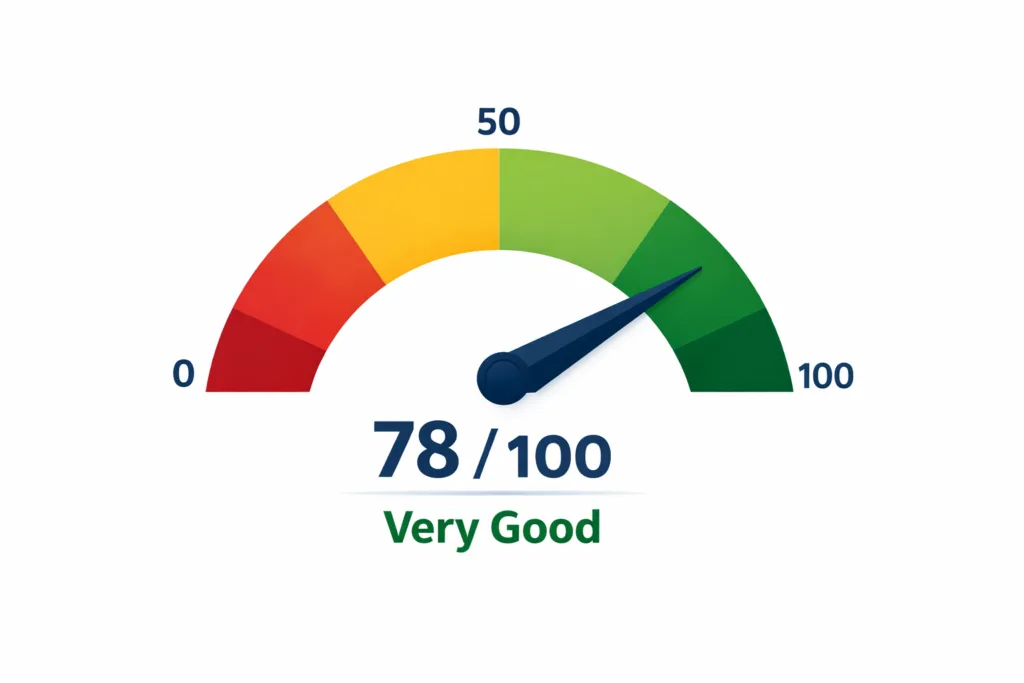

Most financial problems do not arrive with a warning letter. They arrive quietly, through a combination of habits so normalised that they stop feeling like problems. By the time the crisis hits — the job loss, the medical emergency, the retirement shortfall — the warning signs were visible for years. This guide names them explicitly.
The Slow Leak Nobody Notices
Ravi earns ₹1.4 lakh/month. He has a home, a car, two kids in good schools, and an active social life. By every visible metric, he appears financially successful.
But here is what is actually true:
- His combined EMIs (home + car) consume 52% of his income
- He has ₹18,000 in savings — less than two weeks of living expenses
- His mutual fund portfolio is ₹3.2 lakh across 11 funds, 9 of which are overlapping large-cap active funds
- He has no personal health insurance — only his employer’s ₹4 lakh group cover
- He has never increased his ₹8,000/month SIP (started 6 years ago, never stepped up)
- His retirement corpus at the current trajectory: approximately ₹68 lakh at age 60
Ravi does not feel financially unhealthy. He feels busy. He feels like he is managing. He feels like he will “sort it out when things settle down.”
Things have not settled down in six years. They will not.
This is what poor financial health looks like in India in 2026. Not bankruptcy. Not poverty. A comfortable-looking present built on a structurally fragile foundation — with warning signs that are visible if you know what to look for.
This article names 12 of those warning signs. If you recognize yourself in more than three, check your score on the Wealthpedia Financial Health Score — the 15-minute diagnostic that quantifies exactly how fragile or sound your financial foundation actually is.
Quick Summary
Most poor financial health does not announce itself — it hides behind a decent income and a busy life. This article names 12 specific warning signs: no emergency fund, EMIs above 40% of income, never stepped-up SIPs, only employer health insurance, no term life cover, too many overlapping funds, living paycheck to paycheck, no retirement plan, unknown monthly expenses, counting on property as retirement, never reviewing the portfolio, and persistent financial anxiety. Each sign is explained with Indian data, real rupee consequences, and a specific fix. Use the Wealthpedia Financial Health Score to quantify how many apply to you and which to address first.
Join Now →
Warning Sign 1: You Have No Emergency Fund — Or It Would Last Under 3 Months
The short diagnosis: An emergency fund below 3 months of total expenses is the single most common financial vulnerability among Indian salaried households — and the one with the most immediate, cascading consequences.
The math is brutal: if you lose your job tomorrow, how long can you maintain your current lifestyle — including EMIs, school fees, utilities, and groceries — without touching your investments or taking a loan?
If the answer is “less than 3 months,” your entire financial plan is one adverse event away from collapse.
Here is what happens without an emergency fund when the adverse event arrives:
- You break the SIP (destroying years of compounding)
- You take a personal loan at 14–18% to bridge the gap
- You raid the PPF or EPF (with penalties and lost compounding)
- You use credit card revolving credit at 36% effective annual interest
Each of these “solutions” costs far more than simply having had the emergency fund in the first place.
The why 3 months emergency fund is outdated guide establishes that 6 months is the correct Indian minimum — particularly for households with EMIs, dependants, or variable income. A household spending ₹60,000/month (including ₹25,000 in EMIs) needs ₹3.6 lakh minimum in liquid emergency savings.
The fix: Open a separate savings account labelled “Emergency Fund.” Automate ₹5,000–₹10,000/month transfer on salary day until the 6-month target is met. Liquid mutual fund is better than savings account — earns 6.5–7% with same-day redemption. Do this before increasing SIP amounts.
Warning Sign 2: More Than 40% of Your Income Goes to EMIs
The short diagnosis: When your total monthly EMI burden exceeds 40% of gross income, you have entered the debt trap — where debt is consuming the very income needed to build wealth, fund emergencies, and sustain family expenses.
The debt-to-income ratio (DTI) is one of the most important and least tracked personal finance metrics in India. Most people know their EMI amounts individually — but very few add them up and compare them to gross income.
Here is the population-level picture: the combination of home loan + car loan + personal loan + credit card EMI pushes DTI above 50% for a large segment of urban Indian professionals in the 30–45 age bracket.
What high DTI actually costs: DTI Level Monthly Surplus Available Impact 25% (healthy) 75% of income for expenses + savings Room to invest 20–25% 40% (caution) 60% of income Savings rate compressed to 5–10% 55% (danger) 45% of income After basic expenses, nothing left 65%+ (critical) 35% of income Debt servicing consumes lifestyle
The how much debt is too much guide covers the complete framework. The immediate fix for high DTI: stop all new consumer debt immediately. Prepay the highest-interest debt first (credit card, then personal loan). Even ₹2,000–₹3,000/month in extra EMI payments on a personal loan at 18% produces a guaranteed 18% return — better than equity SIP.
Warning Sign 3: You Have Never Increased Your SIP Amount
The short diagnosis: A flat, never-increased SIP is a SIP that is losing purchasing power every year. At 6% inflation, the real value of your monthly ₹10,000 SIP contribution falls by approximately ₹600 in Year 1, ₹636 in Year 2, and compounds downward from there. After 10 years, your ₹10,000 contribution has the real investment power of approximately ₹5,584.
This is the step-up gap. And it is one of the most expensive passive financial mistakes an Indian investor can make.
The step-up SIP India FIRE guide quantifies this precisely:
- ₹10,000/month flat SIP at 12% CAGR over 25 years: ₹1.89 crore
- ₹10,000/month with 10% annual step-up at 12% CAGR over 25 years: ₹3.53 crore
₹1.64 crore difference. On the same starting amount. From one decision — implementing the annual step-up — that most investors have been meaning to do for years.
The fix: Log into your AMC platform or mutual fund app today. Find the “Top-up SIP” or “Step-up SIP” feature. Set an automatic 10% annual increase. This takes 3 minutes and produces ₹1.64 crore in additional long-term corpus on ₹10,000/month. No other 3-minute financial decision produces this return.
Warning Sign 4: You Only Have Employer Group Health Insurance
The short diagnosis: Relying solely on employer-provided group health insurance is one of the most dangerous — and most common — insurance mistakes among salaried Indians. Your employer’s ₹3–₹5 lakh group cover lapses the day you resign, are retrenched, or the company shuts down. The moment you most need insurance is precisely when it disappears.
Additionally, ₹5 lakh health cover sounds substantial until you consider:
- A single major surgery in a private hospital costs ₹4–₹12 lakh
- Medical inflation in India runs at 12–15% annually — as detailed in the healthcare inflation India FIRE guide
- An ICU admission for 10 days costs ₹6–₹15 lakh in tier-1 cities
- A cancer treatment course can cost ₹15–₹40 lakh
A ₹5 lakh group cover — funded by your employer — is financial protection for a hospitalisation that cost ₹5 lakh five years ago.
The fix: Buy personal health insurance of ₹20–₹25 lakh family floater immediately. For those above 40, consider a ₹10 lakh base policy + ₹50 lakh super top-up — this covers catastrophic costs at significantly lower premium than a ₹50 lakh standalone policy.
Warning Sign 5: You Have No Term Life Insurance (Or Grossly Inadequate Cover)
The short diagnosis: If you have a family, dependants, or a home loan — and you die tomorrow — your family’s financial plan should be fully protected. If it is not, you have a critical insurance gap.
Term life insurance is the simplest, most cost-effective financial protection available. For a 30-year-old non-smoker, ₹1 crore of cover for 30 years costs approximately ₹10,000–₹14,000/year — under ₹1,200/month. The coverage adequacy formula: sum assured should be at least 15–20× annual income.
For a ₹12 lakh/year income household: minimum ₹1.8–₹2.4 crore of pure term cover. Not a ULIP. Not an endowment. A pure term plan.
The three most common term insurance failures:
- No term insurance at all (most dangerous)
- Only ₹25–₹50 lakh cover (a starter policy from 10 years ago that was never upgraded as income grew)
- ULIP or money-back plan instead of pure term (paying 3–5× more for significantly less cover)
The fix: Get a pure term insurance quote today. At 30–35, the premium is at its lifetime cheapest. Every year of delay increases the premium by 5–8%. The Financial Health Score specifically flags inadequate or missing term insurance as a critical gap — even though it carries only 5% weight in the overall score, its absence is a financial catastrophe waiting to happen.
Warning Sign 6: You Have More Than 6 Mutual Funds and Cannot Explain What Each One Does
The short diagnosis: Owning 8–12 mutual funds does not create diversification. In most cases, it creates the illusion of diversification while actually concentrating risk in the same 30–50 large-cap stocks — because most Indian retail investors own multiple large-cap active funds that hold identical top-10 holdings.
If you cannot answer “what is this fund for and what unique role does it play in my portfolio?” for each of your holdings, you have portfolio complexity without portfolio strategy.
As explored in the mutual fund portfolio allocator guide, a well-structured portfolio needs 4–6 funds maximum — one fund per meaningful category: large-cap index, mid-cap index, international index, short-duration debt, and gold. Every additional fund beyond that requires a specific, non-duplicative justification.
The overlap reality: Run your portfolio through any fund overlap tool. If your top 3 equity funds all hold HDFC Bank, ICICI Bank, Reliance, Infosys, and TCS in the top 5 positions, you have paid 3 AMCs to own the same 30 stocks.
The fix: Use the waterfall SIP allocation guide to restructure. Consolidate overlapping funds over 2–3 financial years (to utilise the ₹1.25 lakh annual LTCG exemption). Replace with a clean, goal-based architecture: one index fund per meaningful market cap tier, one for international exposure, one for debt.
Warning Sign 7: You Are Living Paycheck to Paycheck Despite a Decent Income
The short diagnosis: If your savings account balance drops to near-zero in the week before salary credit — every month — you are living paycheck to paycheck. In India, this is disturbingly common at income levels that should make it impossible: ₹80,000/month, ₹1.2 lakh/month, even ₹2 lakh/month.
The culprit is almost always lifestyle inflation — expenses growing proportionally with every income increase, ensuring the surplus never accumulates.
The 12 financial mistakes Indians make guide identifies lifestyle inflation as the most common and most invisible financial mistake. It does not feel like a mistake — it feels like progress. A better car, a nicer apartment, more dining out, premium subscriptions. Each feels earned. Together, they consume every rupee of income growth before it can compound.
The diagnostic test: What is your monthly savings surplus as a percentage of gross income? If it is below 15%, you are effectively living paycheck to paycheck regardless of the absolute income level.
The fix: Automate savings on salary day — before any discretionary spending. The how to invest every month guide covers the automation architecture. Direct 70% of every salary increment to SIP step-ups. Leave only 30% for lifestyle improvement.
Warning Sign 8: You Have Not Planned for Retirement Beyond “I Have a SIP Running”
The short diagnosis: Having an active SIP is not a retirement plan. A retirement plan includes: an inflation-adjusted corpus target, a validated SIP trajectory that reaches that target, a safe withdrawal rate calculation, and a decumulation strategy. “I have a ₹10,000/month SIP” addresses none of these.
The retirement planning gap in India is severe. The 2024 Finnovate survey found that 65% of Indian investors had not planned adequately for retirement despite many having active investments. The gap is not investing — it is planning.
Consider: a 35-year-old with ₹75,000/month expenses targeting retirement at 60 needs approximately ₹11 crore in corpus (at 3.5% SWR, 6% inflation for 25 years). A ₹10,000/month flat SIP at 12% CAGR for 25 years builds ₹1.89 crore — a ₹9.11 crore gap.
The investor with “a SIP running” feels responsible. The gap will only become visible at 58, when it is too late.
The fix:
- Calculate your actual required corpus using the FIRE Number Calculator
- Check your current SIP trajectory against that number using the SIP Allocation Optimizer — the Monte Carlo runs 3,000 simulations to tell you the probability your current plan succeeds
- If the gap exists, use the how much SIP per month for retirement India guide to calculate the required monthly amount
Warning Sign 9: Your Monthly Expenses Are a Mystery to You
The short diagnosis: If you cannot tell someone your approximate monthly total expenses within ±15% without checking your bank account — you have a cash flow visibility problem that is costing you money every month.
Most people know their fixed expenses: EMI, rent, school fees. But variable expenses — groceries, dining, shopping, entertainment, subscriptions, transportation, personal care — are typically underestimated by 20–35%.
Here is the real number for most urban Indian households: check the last 3 months of bank + credit card statements and add up every transaction. The total almost always surprises — usually upward.
The invisible leaks that compound: Category What People Think What Bank Statement Shows Dining + food delivery ₹5,000–₹8,000 ₹12,000–₹18,000 Entertainment + OTT ₹2,000 ₹4,500–₹6,000 Shopping (apparel, misc) ₹3,000–₹5,000 ₹8,000–₹15,000 Subscriptions ₹500–₹1,000 ₹2,500–₹4,000
The aggregate underestimation is typically ₹10,000–₹25,000/month — money that could have been invested, compounded, and become ₹60–₹1.5 lakh over 5 years.
The fix: One bank statement audit — categorise every transaction for the last 3 months, average the monthly totals. Use this actual number in the Financial Health Score calculator for an accurate score. Then set up a monthly spending cap for the top 3 leak categories.
Warning Sign 10: You Are Counting on Property as Your Retirement Plan
The short diagnosis: “I own a flat — that’s my retirement plan” is one of the most financially dangerous statements in Indian personal finance. Property as a retirement plan has three critical flaws:
Flaw 1 — Illiquidity: You cannot sell 20% of your flat when you need 3 months of living expenses. Real estate requires months to transact, involves 6–10% in taxes and commissions, and cannot be partially liquidated.
Flaw 2 — No income without a tenant: Owner-occupied property generates zero monthly income. Rental property generates income at approximately 2–3% gross yield (often lower than FD post vacancy, maintenance, and tenant issues).
Flaw 3 — The corpus calculation gap: A ₹1.5 crore flat generates ₹3,000–₹3,750/month in rental income — approximately ₹36,000–₹45,000/year, or 2.4–3% yield. At 3.5% SWR, ₹1.5 crore in equity generates ₹52,500/month. The equity corpus is 14× more income-efficient.
This does not mean property has no place in a financial plan. It means property cannot be the primary retirement vehicle — particularly when it is the family home that will not be sold.
The fix: Run the retirement corpus calculator treating property as illiquid (zero). What corpus do you actually have for income generation? If the answer is uncomfortably small, the FIRE Number Calculator shows exactly how large the liquid corpus needs to be.
Warning Sign 11: You Have Never Reviewed Your Existing SIP Portfolio
The short diagnosis: Starting a SIP 6 years ago and never looking at it again is not disciplined investing. It is neglect with automatic debit.
A portfolio requires annual review because:
- Fund expense ratios may have increased
- Fund categories may have drifted (mid-cap fund now holding large-cap stocks)
- New lower-cost index alternatives may have emerged
- Your allocation may no longer match your current goals and timeline
- The fund may have significantly underperformed its benchmark for 3+ consecutive years
The specific review triggers most Indians miss:
- Has your SIP been stepped up in the last 12 months?
- Is each fund still aligned to the goal it was originally assigned to?
- Has the portfolio allocation drifted due to market returns? (If equity has run up 40%, your 70:30 allocation may now be 82:18)
- Are all funds still in appropriate SEBI categories for their stated mandate?
The fix: Set a recurring April 1 calendar reminder. Use the mutual fund portfolio allocator framework for the annual review checklist. The Financial Health Score includes an investment coverage pillar (15% weight) that specifically assesses portfolio discipline — not just the balance, but the structure and consistency.
Warning Sign 12: You Feel Anxious About Money Despite a Decent Income
The short diagnosis: Financial anxiety at a reasonable income is almost always a symptom of structural financial fragility — not a personality trait. The anxiety has a source: no emergency fund, high EMIs, no retirement visibility, or some combination.
The habits of financially healthy people guide identifies financial anxiety as a reliable leading indicator of poor financial health. People who score above 70 on the Financial Health Score almost universally report lower money stress — not because they are richer, but because they have structural confidence: they know the bills are covered, the emergency fund is there, the investments are working, and the future is planned.
This is not aspirational. It is mechanical. Financial anxiety reduces when:
- Emergency fund is funded (removing the “what if I lose my job” fear)
- Insurance is in place (removing the “what if there’s a medical emergency” fear)
- Retirement is planned (removing the “will I be okay at 65” fear)
The anxiety is the body’s response to structural financial fragility. Fix the structure. The anxiety typically resolves.
The fix: Calculate your Financial Health Score. The score breakdown tells you which pillar is creating the most anxiety — usually the emergency fund or the retirement gap. Fix those two first. The emotional relief from having a 6-month emergency fund is disproportionately larger than the financial value of the fund itself.
The Self-Assessment: How Many Apply to You?
Be honest. Count the warning signs that apply to your situation: Count Assessment What to Do 0–2 Strong foundation Annual review, minor optimisations 3–4 Caution zone Address the 2–3 most urgent gaps 5–6 Weak foundation Structural changes needed in 90 days 7–9 Poor financial health Urgent intervention required 10–12 Critical Stop new discretionary spending immediately; start with emergency fund today
Now take this one step further: calculate your Financial Health Score. The tool quantifies these warning signs with actual numbers — your savings rate percentage, your DTI, your emergency fund months, your investment coverage quality — and combines them into a 0–100 score with a pillar-by-pillar breakdown.
The score does not just confirm that a problem exists. It tells you exactly how large the problem is and which one to fix first.
The Fix Priority Order: Where to Start
Every financial health problem has a fix. The question is sequencing. Here is the optimal order:
Priority 1: Emergency fund (Warning Signs 1, 7, 12)
Build ₹50,000 in the next 30 days. Then ₹1 lakh in the next 60 days. Then keep building until 6 months of expenses. This single action removes the most dangerous structural vulnerability and reduces financial anxiety more than any other single action.
Priority 2: Stop and reverse high-interest consumer debt (Warning Sign 2)
Credit card revolving at 36%, personal loans at 18%. Every ₹1,000 directed here is a guaranteed 18–36% return. No investment comes close. Eliminate consumer debt before increasing investment contributions.
Priority 3: Insurance (Warning Signs 4, 5)
Personal health insurance (₹20 lakh+) and pure term life (15–20× income). This takes one afternoon and removes two of the largest financial catastrophe risks. The annual premium is modest compared to the coverage.
Priority 4: Step-up the SIP (Warning Sign 3)
Implement the 10% annual step-up immediately. Takes 5 minutes. Produces ₹1.5–₹3 crore in additional long-term corpus. No other 5-minute action produces this return.
Priority 5: Portfolio cleanup (Warning Sign 6)
Consolidate overlapping funds. Move to goal-based, low-cost index fund structure. This is a 6–12 month project done over 2 financial years to utilise LTCG exemptions.
Priority 6: Retirement planning (Warning Sign 8)
Calculate the actual required corpus. Check the current trajectory. Fill the gap. This is a planning exercise, not an immediate cash outflow — but it produces the most important number in your financial life.
Priority 7: Cash flow visibility (Warning Signs 7, 9)
Track actual expenses for one month. Automate savings before discretionary spending. This is the sustainability work that keeps all the above improvements running.
Use the Financial Health Score tool to score yourself before and after addressing each priority. The improvement in score is both motivating and diagnostic — confirming that the specific action taken moved the needle.
For those whose score falls in the financial health score by age benchmark well below the age-appropriate target, the improve your financial health score guide provides the detailed pillar-by-pillar improvement plan with specific monthly actions and expected score improvements.
Conclusion: The Warning Signs Are Not the Problem. The Silence Is.
The 12 warning signs in this article are not unusual. They describe the financial profile of the average urban Indian professional with a decent income and an optimistic relationship with the future.
What makes them dangerous is not their presence — it is the silence around them. The absence of a financial diagnostic that would name them, quantify them, and force a conversation about what to do.
The Wealthpedia Financial Health Score breaks that silence. It takes 15 minutes. It requires no login. And it will tell you — with specific numbers — how many of these 12 warning signs are actively present in your financial life and how severe each one is.
Because the most expensive financial problem is the one you know about but have not yet measured.
Frequently Asked Questions
What are the most common signs of poor financial health in India?
The most common: no emergency fund or under 3 months; DTI above 40% (EMIs consuming too much income); never stepped up SIP contributions; relying only on employer group health insurance; no term life insurance; owning too many overlapping mutual funds; living paycheck to paycheck; no retirement corpus plan beyond “I have a SIP.”
How do I know if my financial health is poor?
Check your Financial Health Score — it quantifies your financial health across 7 pillars in 15 minutes. A score below 55 indicates poor financial health. Below 50 is critical. Additionally: if you have under 3 months emergency fund, over 40% DTI, no personal health insurance, or no retirement plan, your financial health is poor regardless of your income.
Is financial anxiety a sign of poor financial health?
Often yes. Financial anxiety at a decent income level is almost always a symptom of structural fragility — no emergency buffer, high debt, no retirement visibility. The anxiety is the signal. The habits of financially healthy people guide shows that structural financial security (emergency fund, insurance, planned retirement) dramatically reduces money anxiety — not higher income.
What is a dangerous debt-to-income ratio in India?
Above 40% is the caution zone; above 50% is dangerous. DTI = total monthly EMIs ÷ gross monthly income × 100. At 50%+ DTI, less than half of income remains for living expenses, savings, and emergencies — making the financial plan structurally fragile. The debt-to-income guide covers the full framework.
How does not having an emergency fund affect financial health?
Catastrophically — it means a single adverse event (job loss, medical emergency, major expense) forces either breaking investments at potentially poor timing, taking high-interest emergency debt, or defaulting on EMIs. The why 3 months emergency fund is outdated guide establishes 6 months as the Indian minimum.
Is employer health insurance enough?
No. Employer group insurance lapses the day you leave the job — exactly when you may need it most. Coverage is typically ₹3–₹5 lakh — insufficient for major hospitalisations in private hospitals. Buy personal health insurance of ₹20 lakh+ family floater as a baseline. Employer cover is a supplement, not the primary protection.
How many mutual funds is too many?
More than 6 equity funds for a long-term portfolio is almost always too many. Beyond 6, additional funds typically add overlap rather than genuine diversification. The ideal structure: 1–2 large-cap index funds + 1 mid-cap index + 1 international index + 1 debt/conservative hybrid. See the mutual fund portfolio allocator guide for the complete framework.
Can property replace retirement savings in India?
No. Owner-occupied property generates zero income. Rental yield in Indian metros is 2–3% gross — below FD returns after costs and vacancy. Property is illiquid, cannot be partially liquidated, and produces far less retirement income per rupee than equity mutual funds. The FIRE Number Calculator should be run treating property as illiquid.
What is the first thing to fix if my financial health is poor?
Build an emergency fund — even ₹50,000 to start. This removes the most immediate structural vulnerability and reduces financial anxiety significantly. Once basic emergency buffer exists, move to eliminating high-interest consumer debt, then insurance, then SIP step-up. See the full priority sequence in the Financial Health Score improvement guide.
How do I know if I am living paycheck to paycheck?
If your savings account drops near zero in the week before salary credit regularly, you are living paycheck to paycheck — regardless of income level. Track your monthly savings surplus as a percentage of gross income. Below 15% is the caution zone. Below 10% means expenses are consuming almost all income.
What is the sign of poor financial health related to retirement?
Having no retirement corpus calculation — not knowing your actual required corpus at retirement. “I have a SIP running” is not a retirement plan. A retirement plan requires: target corpus (inflation-adjusted), current trajectory projection, Monte Carlo survival rate, and a withdrawal strategy. Use the SIP Allocation Optimizer to assess your current trajectory.
How does financial health score reflect these warning signs?
The Financial Health Score quantifies each warning sign: emergency fund (15% weight), DTI (20% weight), savings rate (25% weight), insurance (5% weight), investments (15% weight), cash flow (10% weight), net worth (10% weight). Each warning sign in this article maps directly to one or more pillars in the score.
Is it a warning sign if I have never reviewed my SIP portfolio?
Yes. Annual portfolio review is the minimum maintenance requirement for a well-functioning investment plan. It catches expense ratio increases, category drift, missed step-ups, and allocation drift due to market returns. Set April 1 as the annual review date and use the Financial Health Score tool as the structured review framework.
What is the connection between financial warning signs and FIRE planning?
Every warning sign in this article represents a gap that makes FIRE planning unreliable. A FIRE plan built on a foundation with no emergency fund, high DTI, inadequate insurance, and no step-up SIP will fail at the first adverse event. The multi-goal FIRE planner assumes the foundation is sound — the Financial Health Score validates this assumption.
How long does it take to fix poor financial health?
Emergency fund: 6–18 months depending on income and starting point. High-interest debt: 12–36 months for most consumer debt. Insurance: 1 day (get quotes and buy online). SIP step-up: 5 minutes. Portfolio cleanup: 12–24 months (spread over 2 tax years). Retirement planning: 1 week to plan, decades to execute. Most people see Financial Health Score improve by 10–15 points within 12 months of focused effort.
Is having a low Financial Health Score permanent?
No. As the improve financial health score India guide shows, the score responds directly to behavioural changes — it does not require income increases. Building an emergency fund, implementing SIP step-up, and securing insurance can improve a score from 48 to 65+ within 12 months without any salary increase.
Why do people with high incomes have poor financial health?
Lifestyle inflation — expenses growing proportionally with income, ensuring the surplus never accumulates. Also: high-income earners often take larger loans (bigger home, better car), creating high DTI. The 12 financial mistakes Indians make guide shows that the correlation between income and financial health is weak — the correlation between financial discipline and financial health is strong.
What is the most dangerous warning sign to ignore?
No personal health insurance. A single uninsured major hospitalisation can destroy 5–10 years of accumulated savings in one event. Healthcare inflation at 12–15% means this risk grows every year. Unlike other warning signs which erode wealth gradually, inadequate health insurance can cause a single catastrophic loss.
Should I pause SIP to build emergency fund?
Only if the monthly SIP is larger than what you can maintain while also building the emergency fund. For example: ₹20,000/month SIP on ₹80,000 income with zero emergency fund — reduce SIP to ₹12,000 temporarily, direct ₹8,000 to emergency fund until 3 months is built, then restore full SIP. Do not eliminate the SIP entirely — the habit and automation matter.
How do I prioritise between reducing debt and investing?
High-interest consumer debt (credit card 36%, personal loan 18%): eliminate before investing. Home loan (8–9%): continue EMI while also investing — the equity investment return (12%+ long-run) exceeds the home loan rate. The detailed analysis in the debt-free before FIRE guide covers every scenario.
What is the warning sign related to net worth calculation?
Believing you are wealthy because you own a home — while having minimal liquid net worth. Total net worth includes illiquid property. Liquid net worth (investable assets minus liabilities) is what matters for retirement planning, emergency response, and FIRE calculations. The what should your net worth be at 30 guide covers age-appropriate liquid net worth benchmarks.
How many of these 12 warning signs does the average Indian have?
Based on survey data, the average urban Indian investor exhibits 4–6 of these 12 warning signs. The most universal: no personal health insurance (Warning Sign 4), never stepped up SIP (Warning Sign 3), and inadequate retirement planning (Warning Sign 8). This is consistent with the Finnovate survey finding that the average financial fitness score was 5.29 out of 20.
Can I use the Financial Health Score to track improvement on these warning signs?
Yes — this is one of the primary uses of the tool. Recalculate your score after each significant improvement action. Building the emergency fund improves the emergency fund pillar (15% weight). Implementing SIP step-up improves the investment pillar (15% weight). Getting insurance improves the insurance pillar (5% weight). The score provides concrete, numerical feedback on whether the improvement action worked.
What is the single most actionable step I can take today for poor financial health?
Open a separate savings account or liquid fund account right now and label it “Emergency Fund.” Transfer ₹10,000–₹50,000 from your current savings today — whatever you have. Set up a ₹5,000–₹10,000 monthly auto-transfer on salary day. This single action begins fixing Warning Sign 1 (the most common and most dangerous), reduces financial anxiety (Warning Sign 12), and creates the foundation from which all other improvements become possible.
Disclaimer: All financial guidance in this article is based on general principles and illustrative benchmarks calibrated for Indian conditions. Individual circumstances vary. This article is for educational purposes only. Wealthpedia is not a SEBI-registered investment advisor. Consult a qualified financial planner for decisions specific to your situation. Wealthpedia® is a registered trademark (TM No. 4910385).

Vishal Jhaveri is the founder of Wealthpedia and an MBA Finance professional with over 10 years of experience in financial planning, investing, and wealth creation. He specializes in FIRE (Financial Independence, Retire Early), retirement planning, investing, and personal finance education. Through Wealthpedia, he develops financial calculators and publishes evidence-based content to help Indian investors make informed financial decisions. He regularly reviews and updates Wealthpedia articles to reflect changes in tax, laws, investment regulations, and personal finance best practices.
Quick Wrap up